
Riyadh
Developments need a TIS approved by either RCRC or the Riyadh Amanah. Diriyah and Qiddiya review schemes on their programmes.
A traffic impact study (TIS), also called a traffic impact assessment (TIA), shows whether the network can absorb the traffic a development, facility or construction programme will add. We prepare them in Riyadh, across Saudi Arabia and in Qatar. Where the network cannot cope, the study sets out what must change. We scope it with the reviewer, collect the counts, build the models, test the mitigation and answer comments through to approval.
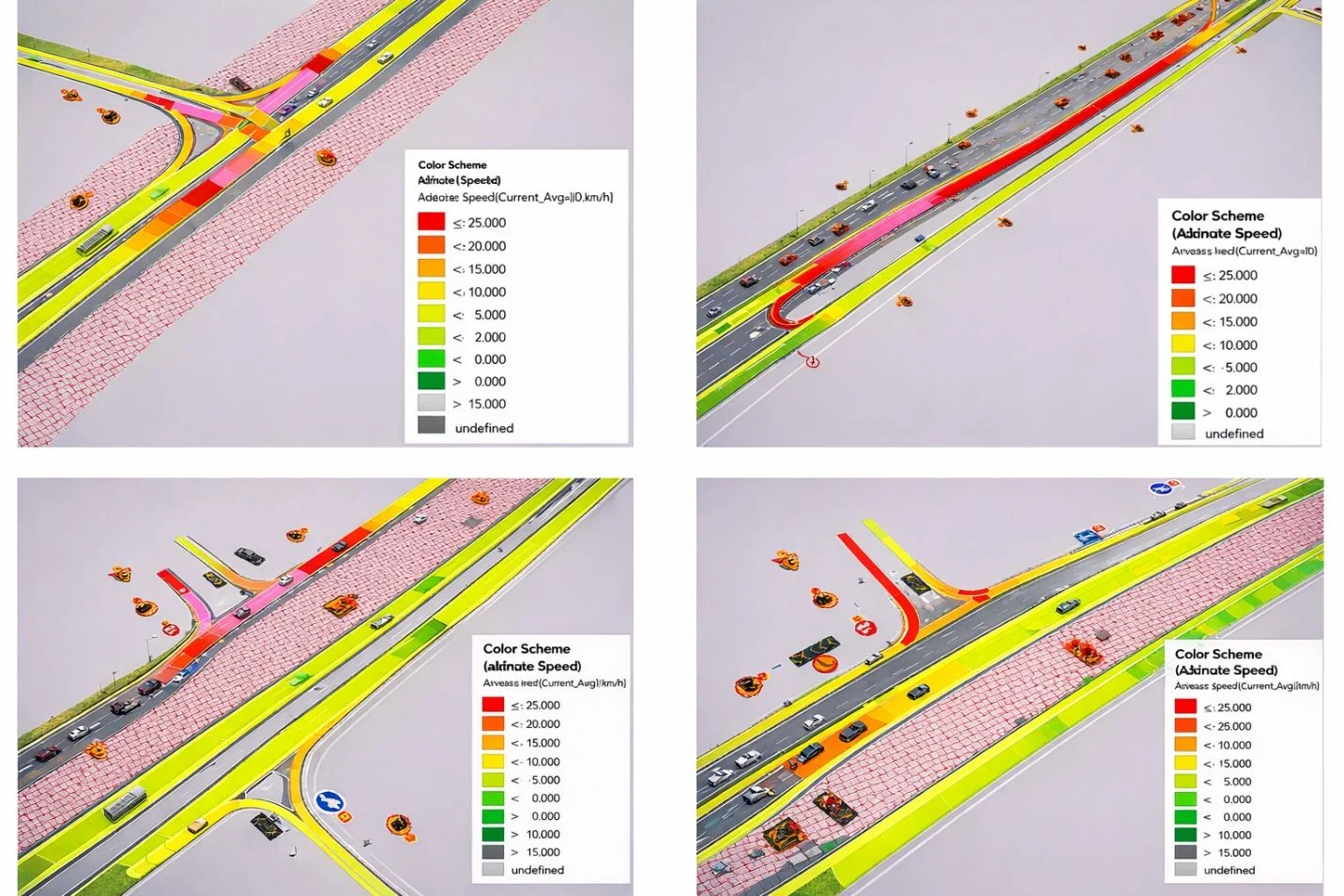
Developments need a TIS approved by either RCRC or the Riyadh Amanah. Diriyah and Qiddiya review schemes on their programmes.
The Amanah or municipality approves development studies; MOT reviews access to national roads; the Royal Commissions for Jubail and Yanbu apply their own rules.
Aramco, NEOM and Qiddiya require studies for new facilities, gates and construction traffic, including shutdown workforce movements.
Studies follow the MOT Guidelines and Procedures for Transportation Studies. Ashghal reviews impacts on its network and construction-stage diversions.
Study area, scenarios and method agreed before any data is collected.
Counts, observations, development data and collision records.
Synchro or SIDRA, VISUM networks, VISSIM where needed.
Junction, access and signal changes tested to the target LOS.
Every assumption stated for the reviewer.
Comments answered and review meetings attended.
Something else? Speak with an engineer.
WhatsApp RiyadhThe terms describe the same type of study and authorities use them interchangeably. Some reserve TIA for a shorter assessment and TIS for the full study with modelling. The reviewer's terms of reference set the scope, not the title.
When a development, facility or construction programme will add traffic that could affect the surrounding network. The Amanah, RCRC, the Royal Commissions or the project owner set the thresholds and ask for a study at the permit stage.
The Riyadh Amanah or the RCRC approves studies for developments, depending on the project location. Diriyah and Qiddiya review studies that affect their programmes.
Usually yes. Reviewers expect recent counts taken in a normal traffic period. We use your existing data if the reviewer accepts it.
A typical TIS takes 3 to 5 weeks from scope agreement, including counts. A construction-phase or access-only study with existing data takes 1 to 2 weeks.
Yes. For Aramco's Jazan refinery shutdown we modelled 20,000 additional workforce movements and presented the results to the Board in a 3D video.
Send the site location and your programme. We come back with scope, price and earliest start, within one working day.
One engineer.
One accountable contact.